Category Archives: Discipleship

Bridling the Tongue (And a Tribute)

“If the church would stop talking for 30 days, we would have revival.” – D. L. Moody 

I came across this quote six or seven weeks ago, and it has not left me.  I have revisited the thought many times.  To what extent do I speak unnecessarily?  Am I disciplined in holding my tongue?  What poor contents of my heart are revealed by my words (Matthew 15:11)? Do the things I say edify and encourage?  To what extent are they just unneeded verbal detritus?   The result has been a decision to speak less…and to listen more.

I don’t mean an absence of conversation, as in a vow of silence, but some small (?) steps: not injecting comments if they’re not really needed, not repeating myself for the sake of emphasis or to make sure I’m heard, and not seeking the last word in casual discussion.  I do think there is value in allowing others to have the floor.  What I may feel is an obligatory verbal edit or counterpoint isn’t as necessary as I might want to think.

And then there’s another step for me in this process.  A good friend and former pastor of mine used to challenge us periodically to go seven days without complaining about anything, criticizing anyone, or defending ourselves (including defending our views) for any reason.  I don’t have to question whether that is a small step.  It isn’t. Try it.  I’ve tried several times and will try again in the days ahead.  I believe it’s a worthy challenge for obvious reasons; just because we have the freedom to say things doesn’t mean we always should.  I think Paul summed it up this way, “I have the right to do anything…but not everything is beneficial.  I have the right to do anything, but I will not be mastered by anything” (1 Cor. 6:12)…including the tongue.    

James, the pastor of the First Church of Jerusalem and the brother of our Lord knew control of the tongue was/is essential to a healthy walk on the pathway of life.  He mentions it three different ways in his letter to the Church.  Here’s one example in his typical blunt way of communicating: “Those who consider themselves religious and yet do not keep a tight rein on their tongue deceive themselves and their religion is worthless” (James 1:26).  

In over 40 years, I’ve never heard GOD yell to get my attention…it’s always been with a quiet whisper; and it was only when I have been quiet that I have heard it.  It’s only when I am quiet that I can hear my family, friends and others share what’s on their hearts and minds.  Love of GOD and our neighbor can manifest itself in many ways.  Perhaps mastery of the tongue is one of those ways.

One final note on Martin Luther King, Jr:

MLK wasn’t a politician, although he operated amongst those for whom politics was all important.

MLK wasn’t an anarchist looking to overthrow authority by creating chaos and disruption, although the reactionary response of many to what he preached revealed itself in chaos and disruption.

MLK wasn’t a moralist, although his message was consistently moral.

MLK was GOD’s man at a point in history when enough was enough.  He was called to confront the social, political, economic and moral hypocrisy condoned and even promoted by the power structures of the nation and call it what it was.

MLK was called to be the point guard of a movement to end the subjugation and denigration of people without power by those with power.

MLK was sent to remind us that the commandment to love our neighbor didn’t have qualifications, like tests of ethnicity, color, country of origin, gender or religion. He was sent to remind us that it is impossible to love GOD without loving our neighbor.

MLK was not perfect; he had his flaws, and was criticized, perhaps rightly, along with much that was unmerited.  But as some wise soul has said, “The only people who are never criticized are the ones who do nothing.” (Source Unknown).

The man might be gone, but the message and the need for struggle remains alive…if we who are here will carry the torch.  May we live lives worthy of this calling.

© Byron L. Hannon, 2020.  All rights reserved to text content unless otherwise noted.
On Worship

On Worship

“Yet a time is coming and has now come when the true worshipers will worship the Father in the Spirit and in truth, for they are the kind of worshipers the Father seeks.”

(John 4:23)

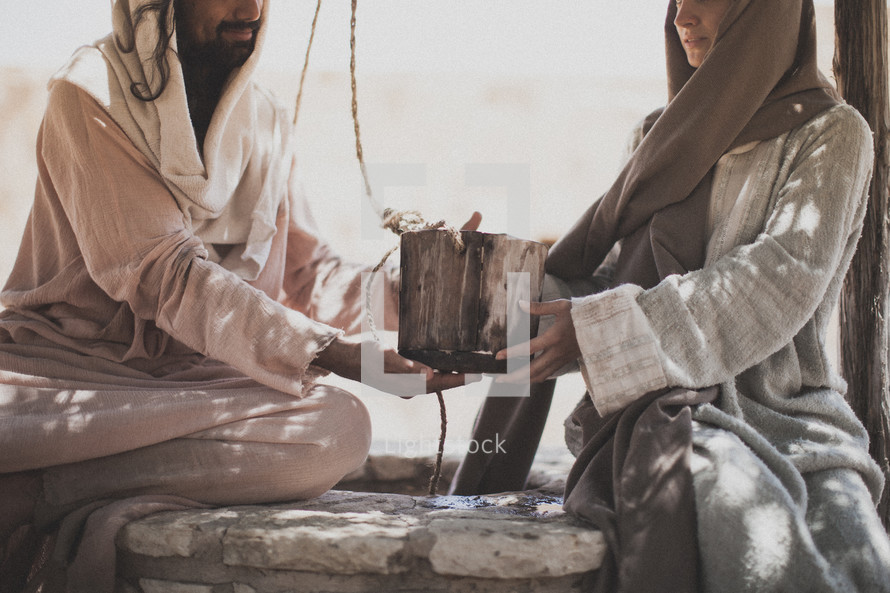
Image result for jesus and samaritan woman

When Jesus had His encounter with the Samaritan woman at that midday well, she revealed something about herself that I think is still common today, in and outside of the Church: an attraction to forms.  For her and other Samaritans, it was where GOD was worshipped that counted.  This kind of preference wasn’t peculiar to Samaritans; the observant Jewish population had its own set of preferences including where worship was supposed to take place.  I hear similar attitudes expressed today when people occasionally compare one church against another.

Years ago, I heard someone say that if you package something in the right way, people will want it and buy it just about regardless of the intrinsic worth of what has been packaged.  Consumer goods makers have long packaged and branded their products with a certain kind of appeal.  At the moment of this writing, I’m thinking of two highly priced, luxury cars, both of which have a less than stellar record of mechanical reliability.  Nonetheless, that issue doesn’t appear to me to have hampered their sales; I see a lot of them on the road.

Image result for consumer marketing

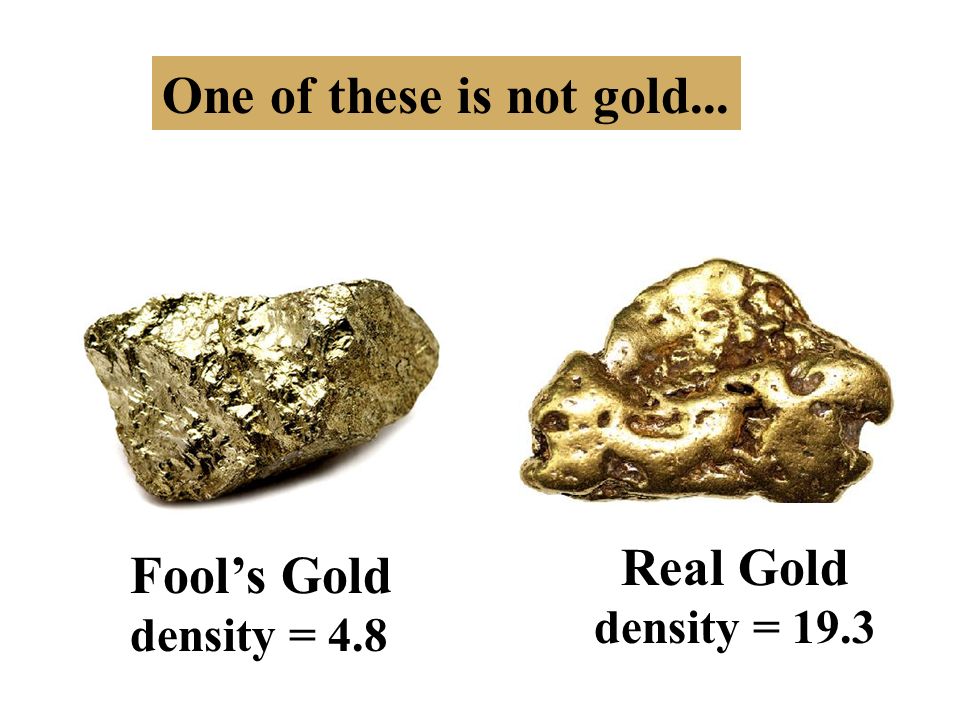
It’s now not uncommon to hear people talk about their brands, i.e. how they want others to perceive them and their supposed value-added presence, participation, engagement, etc.  Significant money is spent by churches marketing their brands.  Potentially interested people check them out, in person or through whatever online presence they have to see if the substance and the forms of what a church is offering is appealing to them.  As in other avenues of choice, folks make decisions based on both substance and form…and sometimes, I think, more on form than substance.  I, and I’m sure you, have peeled back the layer on more than a few eye and ear appealing things to discover all that glitters is not gold.

Image result for gold vs fools gold

Jesus used the opportunity of this encounter to point the Samaritan woman to what was truly spiritual gold.  True worshipers, the kind that GOD seeks, worship Him in Spirit and truth.  It has nothing to do with what the building looks like, or the appearance of the church’s website, or whether it is big or small, or the kind of music that is played and sung, or whether it is high church or low church, or if those who attend wear suits and dresses or jeans and flip flops.  GOD’s people can worship Him in a cathedral and under a tree in a field, in a garage and in a retreat center, in the presence of thousands of people and in the quiet solitude of a personal prayer space.

What counts is not whether our worship provides us with emotional release in the presence of others, but if the worship flowing out of us is led by the Holy Spirit (“For those led by the Spirit of GOD are the children of GOD”–Romans 8:14).  Worship in the Spirit is led by the Spirit.  And, then, our earnest effort to follow the teachings of Jesus is worshiping GOD in truth for Jesus is the visible, tangible manifestation of GOD’s truth (“If you hold to My teaching, you are really My disciples.  Then you will know the truth, and the truth will set you free”—John 8:31-32).

Image result for presentation of food on plates

We may have preferences for what our food looks like on the plate, but it doesn’t alter the substance and taste of the food that gives our bodies the nutrients they needs to be healthy.  Presentation is a form.  The food (the Spirit and the Truth) is the substance. May we never substitute good-looking pap for what is truly nutritious.

© Byron L. Hannon. 2020.  All rights reserved to text content unless otherwise noted.

The Gift of Infinite Options

When [the Magi] had gone, an angel of the Lord appeared to Joseph in a dream. “Get up,” he said, “take the child and His mother and escape to Egypt.  Stay there until I tell you, for Herod is going to search for the child to kill Him.” So he got up, took the child and His mother during the night and left for Egypt, where he stayed until the death of Herod.  And so was fulfilled what the Lord had said through the prophet: “Out of Egypt I called My Son.” (Matthew 2:13-15)

 Image result for matthew 2 13 15

I’ve long believed that the central theme in Scripture, from the story of fall in Genesis through the Revelation of Jesus Christ, is the total redemption of GOD’s creation.  In Genesis, we see it in the prophetic word announcing the ultimate victory of “the seed of the woman.”   We see it hinted at in GOD’s covenant with Noah.  We see it at the divinely caused confusion at the Tower of Babel that prevented humanity from early self-destruction.  We see it in GOD’s covenant with Abraham that led to the formation of, provision for, and protection of Israel through whom would come the Savior.  We see it in the promises made to David that his own heir would sit on his throne forever.  We see it in every exhortation and warning of the prophets to trust GOD and to repent from sin and evil.

We see it in the incarnation of the Word, Christ Jesus, GOD’s peace offering to broken humanity, and in whose life is light and in whose way is healing and everlasting life.  We see it at Pentecost when the Holy Spirit fell upon all flesh, and who gave power to those ready and wanting to receive. And we see it in the continuing victory of the Church despite its own shortcomings and all efforts to discount it, disable it, and crush it. Worldwide, the reign of Jesus is growing, not shrinking; and His disciples await the zenith and culmination of Earth’s history with His return.

Image result for Christ's return

The truth is that GOD has not allowed anyone or anything to stop His plan to redeem the work of His hand.  Herod tried in a most savage way, but he was thwarted–“take the child and His mother and escape to Egypt.  Stay there until I tell you, for Herod is going to search for the child to kill Him.”  The Caesars and many subsequent power structures have tried to destroy the vision and promise wrought by “this child,” continuing even today.

“WITH [GOD] GOOD BASICS, YOU’LL HAVE ENDLESS OPTIONS”

GOD however, does not run out of options when it comes to ensuring the work of redemption.  And He does it in the most creative of ways.  For instance, He gave Elisha’s servant a vision of the mighty army of heaven ready to fight against the enemy threatening the destruction of His chosen people.  Later, He introduced an immigrant Moabite woman (Ruth) to a Judean named Boaz and they became the great-grandparents of King David.  He used the aged and reformed profligate, Solomon, to teach us about godly wisdom.  He used Paul’s imprisonment as a way for Paul to witness to the Roman political hierarchy about Jesus.  The examples go on and on.  Attempts to marginalize GOD and His plan have been and are been made.  Those of the past were proven to be ineffective works of straw.  Those of the present and future will be proven to be unwise, irrelevant and ineffective.  GOD always has an option.

The Apostle Paul refers to the status of the faithful as being in Christ, meaning simply our lives have become one with Christ’s, by faith and the will of GOD.  As such, each one of us is an agent and a servant in GOD’s redemptive story; and GOD plans to use us, and does.  In our weakness, it’s easy to lose sight of this truth.  In our weakness, we sometimes feel overwhelmed by life’s challenges, by felt needs not realized, by the weight of our responsibilities, and by our inability to see better options.  But GOD has an option we generally don’t see…until He chooses to reveal it.

Image result for those who wait on the Lord

Perhaps a prayer we can pray is to be more trusting of Him with our lives, particularly when we feel like we’re on life’s roller coaster.  I’m sure Mary and Joseph felt that way a lot.  Remember, each believer plays a part in GOD’s grand plan of redemption. Let’s focus on discovering and playing our parts.  How He takes care of us and what He does through us is all up to Him and His creative will.  The story of redemption is one story, and you and I have a part if we are in this same faith.  Recall what Jesus said, “If you remain in Me and I in you, you will bear much fruit…” (John 15:5). 

 In the midst of living our lives, caring for children, going to work, doing work around the house, paying the bills, and doing our best to live faithfully, we may be able to see what that fruit looks like and to watch it grow on the vine…or we may not.  Either way, our job is to be in Christ, to remain Him, and to “trust in the Lord with all of our hearts, leaning not on our own understanding, acknowledging Him in all our ways, and He will direct our paths (Proverbs 3:5-6), just like He did for Joseph that night.

Nothing, nothing will successfully get in the way of what GOD is doing.  He’s got infinite options, including more than enough for you.

May You Enter the New Year with Great Hope and Much Joy  

May GOD Bless You Richly 

© Byron L. Hannon, 2019.  All rights reserved to original text content.

Faith That Ponders

When the angels had left them and gone into heaven, the shepherds said to one another, “Let’s go to Bethlehem and see this thing that has happened, which the Lord has told us about.” So they hurried off and found Mary and Joseph, and the baby, who was lying in the manger. When they had seen Him, they spread the word concerning what had been told them about this child, and all who heard it were amazed at what the shepherds said to themBut Mary treasured up all these things and pondered them in her heart. (Luke 2:15-19)

I get it why believing faith is so difficult for a lot of folks.  We’ve managed to rationalize away all mystery.  Mystery is uncomfortable, and we don’t like discomfort as a rule, and certainly the discomfort of not fully understanding something, along with several other things, like waiting.  It’s all so frustrating.  And divine mystery operates on an entirely different level, one that many people find offensive.  We want to believe, like William Ernest Henley, that we are the “master of our fate, the captains of our soul.”*

On top of that are the things we see and hear each and every day, and may even be directly affected by…things that engulf our lives in darkness.  Nearly everyone who reads this has experienced or is experiencing something that cuts deep inside: hurts, disappointments, failures, anger, resentment, sadness, loss, grief.  And there are also those who probably won’t see this for whom waking each day presents a new challenge, sometimes about basic safety and survival.  “What is there to eat?”  “My electric is about to be cut-off and I don’t have the money to pay the bill.”  My child is too sick to go to school, but I can’t afford to miss a day of work to stay home with her.” “We have no money to buy Christmas gifts for the children.”  Have you ever known anyone who lost their job a few days before Christmas?

It’s easy to understand why people find it hard to believe in GOD, and certainly to believe in a loving GOD.  That just doesn’t make much sense, not with all this life distortion that surrounds us.  It’s not logical.  There are too many points of evidence that say otherwise. Logic says the best thing any of us can do is to put aside that foolishness; it’s every man, woman and child for themselves.  We need to take control of our lives and make out of them the very best we can.  And that, in a nutshell, is the philosophy of much of our age.  All we need to do is to look around at those we know to see that it’s true, even if many of those same folks wouldn’t admit it.

By all accounts available to us, Mary was a peasant girl who lived among peasant people who lived in a part of Israel that was considered socially low class.  Think of the towns or parts of cities you probably wouldn’t want to live in…that’s where she was from, both she and Joseph.

There wasn’t much in her experience to suggest that she was days away from winning the grand prize of Publisher’s Clearing House.  She probably expected to live out her days as the women in her family before her had lived out theirs, humble, long days of work in and around the home, eventual marriage, bearing multiple children, likely becoming a widow at some point, depending on her sons to provide for her, and eventually dying before age 50.  She had that to look forward to and the prophetic history of her people.

There was nothing else in her experience that suggested life would be any other way…until the events that began with the visitation from the angel Gabriel and which culminated in that animal stall in Bethlehem.  What particularly got to her was what the shepherds and the visiting magi, and perhaps what others who dropped in on them had to say about her son.  They were forecasting phenomenal things…better than Publisher’s Clearing House.  The Word said she pondered these things in her heart.  The only thing she had to validate what was being said was that mysterious visit from the angel (which could have been just a weird dream) and the prophetic history that her people held on to, because everything else said, “This is too crazy to believe.  It’s too crazy for me to put my hope in.”

We ponder things all the time.  We think about and wonder why life is often the way it is.  We have mental wrestling matches about the things we don’t like and can’t control, and don’t understand.  And sometimes our pondering leads to questioning the love of GOD, the truth of GOD, and even the existence of GOD.  Is it not so?

Mary’s foundation, despite its humble appearance, was deep and solid and strong.  All the while she was trying to sort things out, humongous, other-worldly things (literally), her faith in GOD never left her.  It can be said that it was her faith that pondered.

Oh that it might be said of each of us, that our foundations in the Lord are deep and solid and strong.  May our pondering of the mysteries of GOD always be in faith…because one day, the Mystery born that night will be revealed to us in all of His fullness, all of His glory, and all of His majesty.  Our eyes will see and our ears will hear.  Come, Lord Jesus, Come!

Wishing You and Yours a

Blessed and Faith-Filled Christmas


 * From the poem, Invictus, by William Ernest Henley.

© Byron L. Hannon, 2019.  All rights reserved to text content unless otherwise noted.
Emmanuel

“And she brought forth her firstborn son, and wrapped him in swaddling clothes, and laid him in a manger; because there was no room for them in the inn.” (Luke 2:7)

I doubt there are very many people who have spent significant time in the church who have not heard a message or some other teaching equating our human lives with the inn with no vacancies told in the Advent story.  The question is always are we more like the inn which has no room for the Savior or like one which has room and which welcomes Him?  It certainly captured my attention the first time I heard a message like this.  But to be honest, I’ve heard it so often I think it needs some updating.

Image result for manger scene

I can’t recall ever hearing anyone preach or teach about the stable in which the manger (crib) was placed.  Lest there be any confusion, it was an animal stall–a place to put animals during cold or wet nights.  I seriously doubt that it looked like some of the traditional pictures we’ve all seen where the baby Jesus is laying in the crib with Mary and Joseph kneeling over Him, all with halos over their heads while the cattle and sheep looked on Him in wonderment.  They may have…but I betcha it smelled in there. It was an animal stall, for crying out loud!  It smelled like animals and whatever animals produce.

Image result for farm smell

Think of the last time you rode with the windows down near a farm in the late spring or summer.  You know what I’m talking about?  I had an uncle and aunt and cousins who owned a small farm that had animals.  I used to spend time with them during the summer in my early teen years.  I guarantee you the aroma was farm like.  The one thing we can be sure of is that the manger scene in the Advent story wasn’t a pig pen, like my father used to accuse my room of looking like, it being Bethlehem in the heart of Judea.

GOD the Father chose to allow His Son, the One destined to become the King of Kings, to be born in a smelly animal stall.  There was no pretense, nothing showy, no “Hey, look at me!”  It was the polar opposite; the King born in total humility and near complete anonymity.  Oh, the things GOD does for us because He loves us!

Image result for jeremiah 17 9 niv

How different was that stall, with all it contained, all that it might represent, than the condition of your heart or my heart, with all they contained and, perhaps, even now contain?  The Prophet Jeremiah (17:9) was brutally critical of the human heart: “The heart is deceitful above all things and beyond cure. Who can understand it?  Peter, Paul, and John in their letters to the New Testament churches were explicit about what was in the hearts Jesus sought to enter.  Are they any more a fit place for Jesus than that stall?  Is the aroma much more fragrant than Mary and Joseph encountered the night of her labor?

It is all because of GOD’s love and grace that there is a cure, found only in the Son born that night and alive today. “It is by grace that we are [or can be] saved through faith—it is the gift of GOD” (Eph. 2:8).  Jesus is pleased to come into our crowded and maybe foul smelling hearts to do what only He can do.  I heard someone say yesterday, “The birthday is His but the gift is for us.  Let’s together receive the gift anew, or perhaps for the first time.  Come Lord Jesus, come to cleanse, to make new and to renew.

Emmanuel, Emmanuel

His name is called Emmanuel.

God with us, revealed in us

His name is called Emmanuel.*

* Emmanuel. © C.A. Music, 1976 (Administered by Music Services, Inc.)

© Byron L. Hannon, 2019.  All rights reserved to text content unless otherwise noted.

Subject or Object?

“…I appeal to you for my son Onesimus, who became my son while I was in chains.  Formerly he was useless to you, but now he has become useful both to you and to me.” (Philemon 1:10-11)


When I was studying for pastoral ministry, the Scripture we used in the course on Biblical Interpretation was Paul’s Epistle to Philemon.  I have been a fan of this small book, one of the shortest in the New Testament, ever since.

Philemon was, as far we know, a prosperous Christian in the city of Colossae.  He was also a slave owner.  One of his slaves, a man named Onesimus, had run away and found his way to Paul who was under house arrest in Rome because of his testimony for Christ.  We don’t know any of the circumstances that led to his decision to escape; however, under the rules of slave ownership in the Roman Empire during the 1st century, Philemon had absolute authority over his slaves.  Had Onesimus been caught or had he returned voluntarily, Philemon had the authority to do anything he wanted to punish Onesimus, including having him executed.

Onesimus was a believer as well, or at least he became one.  We don’t know the timing of his conversion, although the one clue we have is that it happened following his escape from the household of Philemon, likely under the discipleship of Paul.  We also know that he was of great help to Paul during his time of imprisonment, as Paul says this to Philemon in his letter.  Paul was sending Onesimus back to Philemon, and exhorted Philemon to receive Onesimus as a brother in Christ and a co-laborer in the gospel.  Paul went so far as to ask Philemon to charge to him any debt Onesimus might have owed.  Because of the risk to Onesimus in returning, Paul was explicit about his authority as an Apostle (and therefore his status as a spiritual superior over Philemon) as a way of protecting Onesimus from potential harm.

That is all background to highlight an interesting literary characteristic in this letter, the use of word play.  Onesimus is a Greek word that means useful or profitable.  This was, it seems, not the character he displayed in his former time under Philemon’s ownership, but under the influence of Paul and perhaps others, Onesimus had grown into his name.  He had become a faithful and useful servant of GOD; and Paul wanted Philemon to receive him as such.  By all indications, this is exactly what happened because we know that Onesimus is again mentioned in the Epistle to the Colossians, described by Paul as “our faithful and dear brother” (Col. 4:9).  In challenging the cultural norm of Philemon’s status as slave owner, Paul asked him to set aside his position as one in complete authority to being one under authority, in reality, under GOD’s authority.

In a branch of philosophy that deals with Subjects and Objects, the Subject is always the observer, and the Object is what is being observed.  An example would be if I saw a bicycle.   I would be the Subject, and what I observed (the bicycle) would be the Object.  Now let’s add a little theological thought to the example.  If I had built the bicycle and painted it blue.  I would still be the Subject, but now I would be more than an observer, I would be a creator who defined the nature of the Object I observed; a blue bicycle.   Stick with me.  This is going somewhere.

For the moment, think of GOD as the Divine Subject, creating, interacting with and observing   the Objects of His creation.  Using the example of the blue bicycle, this Divine Subject would have full authority to define the nature of whatever and whomever He created.  As His created Objects (imbued with His image), those who say they believe in Him would, theoretically, demonstrate the nature He desired, i.e. consistent with His image.  But the combined impact of the fall and the freedom we have often leads to us choosing to live as if we were the Subjects and not the Objects.

Characteristics of a Subject person include having an identity not dependent on another, having the authority to make choices for self and possibly for others, having these attributes recognized and accepted by others, and/or receiving credit for whatever positive achievements in life are attained.  In our relationship with GOD, can we both be Subjects?  If we insist on being a Subject person, can we be useful to GOD, that is can we be as Onesimus?

Philemon was probably very accustomed to being a Subject person in his world, giving definition to the life of Onesimus and others, something that Onesimus apparently rejected as expressed by his escape. Related questions I’ve been wrestling with include whether, despite my declaration of faith in Jesus Christ and my choice to follow Him as a disciple, do I express myself more as a Subject person or as an Object person.  Using my own explanation, do I consistently allow (and even seek for) GOD to give my life definition or do I exert self-interest in that?  Am I willing to be the Object to His Supreme Subject?  It seems to me those are the same questions Philemon faced.

A substitute word for Object is Servant.  Rephrased, the question becomes: am I willing to be a Servant to GOD, that is think like one and live like one in my relationship with Him?  And here’s the kicker: am I willing to do the same in my relationship with others?  If I am truly following Jesus, who said, “I came to serve, not to be served” (Matt. 20:28; Mark 10:45), then I need to see others as Subject people.  I think this is what Mother Teresa meant when she talked about seeing Jesus in every person to whom she ministered.  I pray (literally) that whatever usefulness I may have to the kingdom will be guided by that thinking and by walking that pathway.

© Byron L. Hannon, 2019.  All rights reserved to original text content.


GOD’s Trying to Tell You Something

The LORD of hosts is with us; the God of Jacob is our refuge (Psalm 46:7)

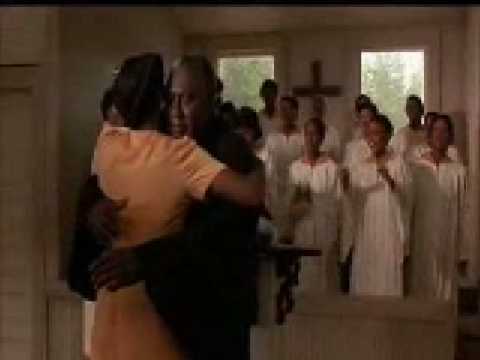
Toward the end of the movie, The Color Purple1, a principal supporting character, Shug Avery, is reconciled to her estranged pastor father and he to her.  Shug is a strong-willed and very talented singer who years earlier had left the church and singing with the choir for the “fast life” as a club singer, along with other lifestyle choices that deeply angered her father.  A seemingly insurmountable obstacle had grown between the two of them, what the Bible calls a wall of separation.

In the scene I’m thinking of, Shug had returned home after having been away.  She and her friends, some of whom were musicians, were picnicking on a beautiful Sunday.  They were not too far from her father’s church.  She is entertaining everyone, singing a jazz number and the musicians are backing her up.  Cut away to her father standing in his pulpit, preaching.  It was a warm day, and the church windows were open.  Some of the congregation could hear her singing in the distance.  One woman interrupts the pastor to ask the choir to sing, God’s Trying to Tell You Something2.  The choir begins. For a moment, Shug and the choir are singing over each other.  Then Shug, something pulling at her heart, begins singing with the choir from a distance as she begins walking toward the church.  The musicians join in as the crowd moves with her.  Her father, recognizing her unique voice, looks up surprised but with longing for his daughter.  She walks through the doors of the church; the choir soloist steps back to join with the other choir members as Shug assumes the solo part. Everyone is transfixed as, still singing, she approaches her father, tears streaming down both their faces as they hug, and she whispers in his ear, “See daddy, even sinners have souls.”  The church erupts in joy at their reconciliation.  This is a GOD moment.

Image result for shug and her father

I’ve seen that scene many times, and am always captured by it.  To say that it is powerful is an understatement.  More importantly, it reinforces for me my belief that GOD is always trying to tell us something.  He had something for Shug to hear and He had something for her father to hear.  I believe He has something for you and I to hear.  The question for us is whether we have ears to hear what GOD is saying.  We only develop this ability by actively caring what He has to say, and setting aside those obstacles that interfere with our receptivity to His voice.

In the strange times in which we live, when emotional tumult and people living at cross purposes seems to be not only the order of the day, but common to our time, and when interior peace is a precious commodity hard to find and keep, what if GOD is trying to tell us something?  This morning I was drawn to reread Psalm 46, which begins by reminding us that GOD is our refuge and strength, a very present help in time of trouble (as opposed to the strategies we’ve self-created or modeled after other people).  The psalmist goes on to list some incredible hypothetical catastrophes that would cause people to tremble in terror if they actually happened.  It is here that GOD says, through the psalm, “Even if the very worst you can imagine happens, relax; don’t get yourself all worked up.  Remember who I Am.  At the right time, everyone will know who I AM, and they will exalt me.  But for now, I want you to remember, and trust me to care for you in the midst of your earthly reality.”

I find myself in a lot of conversations these days in which people are upset over things far beyond any of our control.  My flesh wants to be upset too.  I want to shout at the wind, too, “Why must this be!”  But then I remember Psalm 46, and rather than help fan the flames of discontent and discord, I want to be a peacemaker for Christ’s sake.

Maybe GOD is trying to tell us something.  Just sayin’.

  1.  Color Purple was distributed in 1985 by Warner Bros. and was produced by Amblin Productions. It was directed by Steven Spielberg, and was based on the Pulitzer Prize winning novel of the same name by Alice Walker.
  2. God’s Trying To Tell You Something. Lyrics by Tata Vega.

 © Byron L. Hannon, 2019.  All rights reserved to text content unless otherwise noted.  

An Offensive Man

“He is despised and rejected by men,
A Man of sorrows and acquainted with grief.
And we hid, as it were, our faces from Him;
He was despised, and we did not esteem Him.” (Isaiah 53:3)

 “In Him was life, and the life was the light of men. And the light shines in the darkness, and the darkness did not comprehend it… He was in the world, and the world was made through Him, and the world did not know Him.  He came to His own, and His own did not receive Him.”  (John 1:4-5, 10-11) 

“Do not think that I came to bring peace on earth. I did not come to bring peace but a sword.” (Matthew 10:34)


Many years ago, reading one of Chuck Swindoll’s books (I believe it was Improving Your Serve), I was struck by this line (my paraphrase): “Most people only want $3.00 worth of GOD.  They want just enough to feel good, but so much that it will demand something from them.”  I think that’s the main reason Jesus was and continues to be offensive to so many people; His standard was so much higher than the common preference ($3.00 worth).  His was to seek all of GOD, and that meant yielding all of Himself to GOD.  Do you remember how deeply impressed Jesus was with the widow who placed her two pennies into the Temple offering, and by comparison, how unimpressed He was with those who gave so much more out of their abundance?

Image result for widow with two mites

The life of Jesus was relatively simple to understand because He lived by absolutes: He obeyed GOD; He communed with GOD; He trusted GOD; He was filled with GOD’s Spirit; He despised sin in all of its shades; He offered mercy and grace to every sinner: He offered them abundant life; He made broken people whole; He claimed to be the doorway to GOD; He challenged people to follow Him (i.e. follow His life model); and He lived and died sacrificially.  Amazingly, many find Him, for these reasons, to be offensive to their lives.

LET ME MAKE SURE I UNDERSTAND.  YOU’RE ABSOLUTELY SURE, THERE ARE NO ABSOLUTES?

I suspect that the root of the offense is the idea of a sovereign GOD.  If GOD is sovereign, then there is no room for me to define how much of Him I want and how much I don’t.  I can’t treat Him like a religious menu.   It’s ironic that those who resist some or all of the absolutes related to who Jesus is, want absolute freedom to choose how much of Him they accept.  But if GOD is sovereign and Jesus is GOD incarnate, then Jesus is the Lord to whom I need to cede all control.  Jesus knew His very being would be a problem for people which is why He said, “Blessed are those who do not take offense at me” (Matthew 11:6; Luke 7:23).

Of course, many have chosen to follow Him, imperfectly but a deep sincerity that does not allow them to soft-sell Him.  That kind of commitment tends to make them offensive as well.  As far as we know, all of the apostles, along with the early Church, were persecuted severely, and all but one was martyred.  This pattern continues today in some parts of the world where the underground Church is alive and doing the business of proclaiming the Savior at great risk.  Even in many of the world’s more tolerant places, it is common for Christ and His followers to be dismissed and even mocked.  He knew this would happen, and He exhorted His own to keep the faith, and to not grow tired of doing good.

And so the question I’m left with is whether I prefer to be an offense for Christ or an offense to Him.  If, in fact, He brought a sword (His Word) to force division and the need to choose (it’s what He said), I choose to be an offense for Him.  Look, I don’t want to be offensive to anyone; and I certainly don’t want to be dismissed or ignored or mocked.  I don’t want anyone angry at me; but if it comes down to it, I’d rather have Jesus.

© Byron L. Hannon, 2019.  All rights reserved to original text content.


The Value of Being Pushed

Image result for henri nouwen

Do you know Henri Nouwen?  If not, you should check him out…he’s easily found on the internet, along with the many books he has written.  A thumbnail description includes him being a fairly contemporary Roman Catholic cleric who resigned from a prestigious teaching position at one of the Ivy League universities in order to work with severely disabled adults.  I would recommend him to anyone seeking a thoughtful, mature spiritual voice able to speak across denominational lines.

Something from his writings reminded me of to acknowledge many who have had a strong influence on my life.  As I near the end of my sixth decade, I realize that it took a lot of people to help me become me.  These are people GOD placed in my life and pathway at just the right time, starting with my parents.  There are so many things I would say to them if I could, things I didn’t have the insight or appreciation to say when they were alive.  I realize that I was loved by my parents.  I know that they sacrificed for me in big and little ways, some of which I know of and I’m sure many that I don’t.  I know that they suffered pain through the loss of a daughter, my sister, and even strains in their own relationship. Still, they pushed me to be me.

I recall Mr. P., my eighth grade homeroom and social studies teacher, who told me he would intellectually emancipate me, and who did not make it easy; but he was always interesting.  I remember Mr. R, my high school US History I and II teacher who told me I was slipping when I only got a 97 on one of his exams (I still have the blue book with his comment written on the cover).  And then there’s my college roommate with whom I am still bosom buddies after nearly 50 years (I just spoke with him a three days ago).  It is doubtful in life that two people so dissimilar in background and personality would become as close as brothers, with both of us winding up in pastoral ministry.  I don’t gamble, but Vegas odds would have been something like 10 million to one on our vocational outcome (bet a dollar in 1973 that those two would both become pastors and win $10 million years later).  To say that he pushed me to experience some things outside of my comfort zone is an understatement.  All I can say is, GOD is merciful and gracious, and so full of love.

I cannot forget Mrs. T., a college counselor, who called me on it when I wasn’t being me, and later, a boss who challenged me to trust my instincts and step up my game.  It was his hard nudging that enabled me to do a lot of things years later that probably would have never happened had it not been for his mentorship.  And of course, I dare not forget all of the pastors,  pastoral colleagues, and the people of GOD from whom I have learned so much, including one who had the ability to get into my head like few others (my college roomie and my wife being the other two).  Finally, to her with whom I have shared a life, thanks for never settling for other than my best.

Being pushed isn’t always comfortable, and all of us have those people in our lives who push us for the wrong reasons and in ways that are not helpful.  But that doesn’t negate the powerful, positive impact of and value gained from those who saw something in us that a little (or a lot of) pushing could polish.  That’s true even of people like Henri Nouwen who gave me the idea.

© Byron L. Hannon, 2019.  All rights reserved to text content.

Jesus, Make Me A Fence

And I sought for a man among them, that should make up the hedge, and stand in the gap before me for the land, that I should not destroy it…” (Ezekiel 22:30)


This morning (Sunday), I was thrust into preaching at a church service I was attending.  The pastor who was scheduled to preach was involved in a car accident while traveling to the church.   It seems his visibility was hampered by heavy rain when someone cut in front of him.  Fortunately, neither he nor his wife nor anyone else was injured, and we were able to chat briefly later in the afternoon.

I expected to “give greetings” as is common in church ministry, but preaching was not on my radar…initially.  It wasn’t until I was just about to eat breakfast that I sensed a need to have a sermon ready “in my back pocket.”  So I readied myself.

All of this reminds me that we never really know what life will bring, moment by moment.  The decisions we make, the circumstances over which we have no control, that one second which might be the difference between our going on about our day or disaster is always a constant in our lives.  We don’t begin or end our days thinking of this, but it is our reality nonetheless.  For years, I’ve been fond of saying that none of us are guaranteed any moment other the one in which we’re currently standing.  Beyond that, only GOD knows, just like I believe He knew that accident would happen and like I believe He placed it in my mind to have a sermon ready…just in case.

I think the word He spoke through the prophet Ezekiel is similar.  The spiritual deterioration of GOD’s people was leading them to an apostasy from which they might not recover.  So far were their hearts and wills from the heart and will of GOD that He judged that punishing them by destroying their land was better than them destroying themselves.  But He desired their repentance more than He desired to punish them, and searched for someone to be a fence on their behalf, someone to be a hedge of protection who would stand in the gap in intercession for them, someone who would plead their case, and still His anger.

Several years ago Christian artist, Fred Hammond, made popular again on the “contemporary urban gospel” charts, a song written decades ago by Sam Cooke, Jesus Be A Fence.*  It’s an up-tempo song whose lyrics, summarized, plead for Jesus to provide protection from the evils of the world and to fulfill His role as our interceding High Priest.  It is a fun song to listen to and sing along with…but good teaching doesn’t stop there.

The Apostle Peter teaches that believers are a holy nation of priests, those who are called to reveal the wonder and glory of GOD.  As priests, it is our role to be that fence, that hedge, that one who will plead the case for those who may be a decision, an uncontrollable circumstance, a second away from disaster.  I can’t think of a better way to love our neighbors as ourselves.  Jesus, make me a fence.

Jesus Be A Fence. Performed by Fred Hammond. Written by Sam Cooke. 

© Byron L. Hannon, 2019.  All rights reserved to original text content.