
Author Archives: Byron Hannon

Unknown's avatar

About Byron Hannon

I am a discipler, teacher, coach (and ordained elder) passionate about helping people move beyond the “elementary teachings about Christ” (Hebrews 6:1) to maturity and the fullness of the abundant life promised by Jesus (John 10:10) in our postmodern, post-Christian, and post-truth world

Becoming an Oak of Righteousness

“They will be called oaks of righteousness, a planting of the Lord
    for the display of His splendor.” (Isaiah 61:3)

In late Autumn of 2008 and early Winter 2009, I felt drawn to several passages in scripture in a way different than anytime previously.  I felt somehow that I was being gently compelled to read and reread these verses over and over again, and to meditate on them continuously.  It was only months later that I realized GOD was giving me a vision for ministry that continues to grip me still today.  The most prominent of those passages to me is the one above.

The prophet Isaiah was given these words to speak to GOD’s dominated and dejected people.  It was a part of a larger promise to them about what He was going to do in their lives, despite the many ways they had previously rejected His love and leadership.  In many ways GOD’s promise of future well-being parallels what He spoke through Jeremiah: “For I know the plans I have for you,” declares the Lord, “plans to prosper you and not to harm you, plans to give you hope and a future” (Jeremiah 29:11).   

Centuries later, when Jesus entered the synagogue in Nazareth (I once described Nazareth as the Camden of Israel), He was invited to read from the Word of GOD.  He was given the scroll containing Isaiah and He read the portion of the prophecy that included GOD’s promise of restoration and healing that would lead to the restored and healed becoming oaks of righteousness.  Then Jesus declared to those gathered, “Today this scripture is fulfilled in your hearing” (Luke 4:16-21).  The promise that those who belonged to GOD would become oaks of righteousness is a direct correlate of the work Jesus would do in those whose trust and hope was in Him.

Fully mature oak trees are strong and sturdy.  Their roots grow deep and their limbs spread wide.  Throughout the year, birds find shelter in them.  The fruit of their branches, acorns, are sustenance for the many squirrels which make their homes in them.  Their leaves give us shade when it’s hot, their root systems help to stabilize the foundations of nearby homes, and their size and presence serve as windbreaks against the winter’s cold blasts.  Oak trees serve are necessary to human and animal life.  How much more so are oaks of righteousness necessary to the spiritual well-being of those around us?

Humorist Evan Esar said, “You can’t do anything about the length of your life, but you can do something about its width and depth.”  There is a way to grow deep and wide, like an oak tree.   The Bible often refers to it as the “path of life.”  It is the path of continual communion with and service to GOD modeled by Jesus and copied by the faithful ever since.  It is the path on which we first recognize the depth of our motivation to be self-seeking and then, with sincere humility, deeply hunger to be GOD-seeking.  It is the path carved for us by the Holy Spirit through the hills and valleys, the twists and turns of our life years.  He, alone, serves as guide to those who are on this journey of discovery, confrontation, continuous yielding and continuous cultivation.

Many, I find, are content to live as saplings.  The funny thing is, though, in nature I’ve never seen a sapling remain a sapling.  It either grows into something bigger or it withers.  Even if it were able to remain a sapling over the entirety of its life, it would serve no purpose except to itself.  And the truth is saplings can rarely stand against the strong, harsh winds of life.  The purpose behind the messages of both Isaiah and Jesus points to the needs of others.  Oaks don’t exist just for themselves; they bless whatever is around them.  More than ever, the world needs oaks of righteousness not their substitutes.

© Byron L. Hannon, 2020.  All rights reserved to original text content.
 

The Gift of the 4 P’s

“The Lord bless you
    and keep you;
 the Lord make His face shine on you
    and be gracious to you;
 the Lord turn His face toward you
    and give you peace.” (Numbers 6:24-26)

I was in a meeting a couple of days ago and was asked to pray a benediction to dismiss the group.  For many, benedictions are little more than ritualistic ways to spiritualize the end of a gathering, and little thought need begiven to what is said…almost anything will do.  In truth, a benediction is a divine blessing acknowledging our continuing need for GOD even as we part company from whatever gathering has caused us to be together.

GOD desires that His people be on the receiving end of blessings.  So much of the early part of the Hebrew Bible (Old Testament) is focused on the blessings He wants to bestow.  Perhaps the most famous example of this desire is the blessing we see in Numbers 6 which GOD gave to Moses for his brother, the High Priest, Aaron to pray over the people.  The heart of GOD is to give the best to those whose trust is in Him.

Everyone in the meeting I mentioned were in some type of vocational ministry.  Some had many years of experience and others were in the early stage of their journey.  The one thing we all had in common was that we all are in roles that require us to speak blessing into the lives of others.  As I began to pray, I thought about and vocalized how much we in that group also need divine blessing, that we too are earthen, imperfect vessels in need of continually refilling and refreshing.  I asked GOD to bless each one of us with what I’m beginning to call the the 4 P’s, which I expound on here.

As we depart, let us depart with GOD’s peace.  Jesus said to His disciples, “Peace I leave with you. My peace I give you” (John 14:27).  May we be one with Him and them, as Jesus prayed, and receive the blessing of peace.

As we depart, may we be aware of the Lord’s presence.  In the Hebrew Bible and in the New Covenant that followed, the Lord says to His own, “I will never leave nor forsake you.” Give us such spiritual sensitivity that we can testify within ourselves, surely the presence of the Lord is in this place.

As we depart, may we be filled with His power.  2 Timothy 1:17 says, For God has not given us a spirit of fear, but of power and of love and of a sound mind.”  Let us not have minds that underestimate GOD and what He is able to do within us and through us.      

As we depart, may we be confident in GOD’s provision.  Let us be those who seek first the kingdom of GOD and His righteousness (Matthew 6:33) and let us rest in the knowledge that our deepest needs are fully known and intimate care is always on its way.

These things are gifts of divine nature that are appropriate for those in relationship with GOD.  We all need them for the health of that relationship and we need that relationship in order to receive the gifts.

Blessings,


© Byron L. Hannon, 2020.  All rights reserved for original text content.


Dirty Feet

“…What kind of people ought you to be? You ought to live holy and godly lives as you look forward to the day of God and speed its coming…” (2 Peter 3:11-12)

On the eve of His crucifixion, Jesus did a curious thing.  He took off His outer robe, wrapped a towel around His waist, took a bowl of water and began to wash the feet of His disciples.  Peter was incensed to the point of refusing this service from the Lord.  I think his motive was right; it was improper in his mind for the Son of GOD to perform a servant’s task.  Jesus made it clear that Peter’s understanding was off-center.  Peter, being Peter, went whole hog, “Well then, don’t just wash my feet, but my whole body!”  Again, Jesus clarified things for him; the rest of him was already clean.  His feet were where the need was (John 13:1-17).

There are many believers today who practice foot washing in their churches, treating this act as a sacrament in the same way as baptism and the eucharist are treated. I think, though, if we restrict this teaching to a literal command to wash the feet of others as a spiritual practice, we can miss a larger point.  I believe Jesus was making a point about being holy and our need to help each other live that way.

1st century Palestine was a dusty place, and foot washing was probably as common for its residents as brushing teeth is in our day.  Walking, the common mode of transportation, would easily make a person’s feet dirty.  Even activity in and around the home would have a similar effect.  The phrase “shake the dust off your feet” was more than symbolic; people had enough dust on their feet to shake some off.  Daily living exposed walkers’ feet to the common dust, dirt, and detritus of the road.  They could never be fully clean until their feet were clean.

In the same way, daily exposure to the common things of this world can have this effect on us, dirtying-up our “feet,” leaving its remnants on us, conflicting our thinking, our aspirations, our commitments, even as the rest of our spiritual bodies are “clean.”  A regular cleansing of the soul is always in order so that all of us is GOD’s, all of us is committed to His glory, all of us is filled with His Spirit, nothing is held in reserve, i.e. being holy.  And this, according to Jesus, is what we should do for each other as He did for us.  I am my sister’s and my brother’s keeper.  They are mine. I am accountable to them, and they to me.  We wash the feet of one another when we help and encourage each other to “walk worthy of our calling” and when we respond affirmatively to that help and encouragement.

Except in certain circles, we don’t hear much about holiness and holy living today, even in the Church.  For many, being holy is an irrelevant and outdated concept inconsistent with the values and preferences of contemporary life.  Others may not go to this extreme, but don’t believe it’s possible to be holy so it’s effectively dismissed.  Others like the concept but avoid focusing on holiness head-on, treating it like super-Christianity.  All three perspectives are in conflict with the Living and written Word of GOD.

The message I see is that not only is holy living possible, its pursuit is necessary to have fellowship with Jesus.  So…“Let us hold tightly without wavering to the hope we affirm, for God can be trusted to keep His promise.  Let us think of ways to motivate one another to acts of love and good works.  And let us not neglect our meeting together, as some people do, but encourage one another, especially now that the day of His return is drawing near (Hebrews 10:23-25, NLT).

© Byron L. Hannon, 2020.  All rights reserved to original text content.

A Work Ethic to Model

“Continue to work out your salvation [that is, cultivate it, bring it to full effect, actively pursue spiritual maturity] with awe-inspired fear and trembling [using serious caution and critical self-evaluation to avoid anything that might offend God or discredit the name of Christ].” (Philippians 2:12, Amplified Bible)

The early part of this past week has included near continual coverage of the tragic loss of nine adults and children in the helicopter crash in southern California, including those of retired NBA player Kobe Bryant and his 13-year-old daughter, Gianna.

For those who may not know, Kobe began his NBA career at age 18 and played for 20 years.  Described by one coach as a basketball savant, he was a perennial all-star selection and will surely be soon elected to the Naismith Basketball Hall of Fame.  One of the themes often raised in tributes to him was his dedication to working hard to perfect his game, in season and out of season.  Following the end of every NBA season that began in September and often went into June, he would take two weeks off from training.  When the two weeks ended, he would rise every day at 5:30am and follow a disciplined training regimen to heal his body and begin preparing it for the next season.  This included time spent refining his skills, focusing on the areas which he deemed in need of improvement.

I heard him say, in a short interview clip, that he recognized that he had a GOD-given talent for the game, and that it was his responsibility to honor what he received by working as hard as he could to perfect what he had been given.  His love for the game gave him the desire to want to be disciplined and to work hard.  It seemed the work that nobody saw apart from the games was nearly as joyful to him as the games themselves because of his love of what he did.

There are extraordinarily gifted people in every facet of life.  My guess is that the best of these best are that way because they, like Kobe, don’t take their giftedness for granted and continually work hard to take what they’ve been given to become as great as they can.

I think this is what the Apostle Paul had in mind when he wrote what we see in Philippians 2:12 (I particularly like the Amplified version emphasis). Salvation is a free gift of GOD; no human effort is ever involved (“For it is by grace you have been saved, through faith—and this is not from yourselves, it is the gift of God— not by works, so that no one can boast.” – Ephesians 2:8-9).  What many people think, I fear, is that this gift of grace means they don’t need to do anything after receiving it…just bask in the glow, so to speak. Additionally, I believe many treat their salvation as a one-to-one interaction between GOD and themselves that has no real bearing on others.  If these two observation were put to most people who claim a salvation experience, it probably would result in denials, but how many of us “saved” folks actually view others as the intended beneficiaries of our faith and live accordingly?  It’s a serious and important question.

For people serious about following Jesus, concern for others must always be on our minds  (recall the parable of the lost sheep).  Scripture consistently points to a tri-part relationship: GOD – Us – Others.  Perhaps a more theological way of saying this is that our horizontal relationship of presence with others is to be based on the solid foundation of a vertical relationship with GOD in which presence is mutually given and received.  As we receive grace abundantly, we’re to be abundantly gracious to others.

The basketball world and those who enjoy it benefited from the extent to which Kobe worked to perfect his gift to the point that he stood above most who themselves are incredibly gifted athletically.  He put in the work.  Paul’s word to us is to take GOD’s grace so seriously that we put in the work so that what He has placed within us reveals itself outwardly more and more and the glory of GOD becomes evident to those around us.  Others benefit because we have become intimate with GOD.

You and I are not great, but GOD is…and so is the salvation which He has given us.  In many ways, it is like a hidden diamond that, through a disciplined spiritual life, rises to the surface and shines for everyone to see.  Let’s be people who put in the work so that others will see the brilliance and beauty of the Lord.

© Byron L. Hannon, 2020.  All rights reserved to original text content.
Cross Carrying

“Then Jesus said to his disciples, ‘Whoever wants to be my disciple must deny themselves and take up their cross and follow me.’” (Matthew 16:24)

Many years ago, I faced one of those heart rending experiences that many of us face during our lifetimes.  I know I’m not unique in that, but I remember the searing pain of that wound.  I’m sure at some level I may have questioned or wanted to question GOD about why this happened.  I don’t remember doing that, but I suspect I did.  It took a while, but my heart healed and life went on.

It was several years after that event that I was sitting in my office at work (I was doing HR work in a medium sized company then) and a co-worker came to my door wanting to talk.  He knew nothing about my trouble.  When he sat down, his opening words were something to the effect, “I don’t know why, but I feel like I can talk to you about this.”  He went on to describe a pain rooted in a set of circumstances which were nearly identical to what I had experienced.”  In a flash, I saw the hand of GOD at work, and I had to chuckle to myself.  It was then that I began to see this passage from Matthew in a new light.  The kind of cross beam Jesus carried was rough-hewn and heavy.  It was His burden to carry all the way to Calvary.  He did that for us.

In a very real way, the cross was/is a means of GOD’s grace (favor) to us.  I was reminded of this a few minutes ago as a result of a conversation with someone else.  There is a Hebrew word hesed (alternative: chesed) which means the eternal kindness of GOD that is revealed in mercy.  I recall reading someone many years ago who gave it this loose translation: Mercy that is given because the giver has stood in the shoes of one in need.

Jesus stood in my shoes…and yours, which I believe was the Father’s intent.  We needed and continue to need GOD’s mercy.  His mercy is not from a distance; it is up close and personal because Jesus knows our hurts, our disappointments, our suffering through His own…and He knows our offenses and our failures.  Jesus stood in my shoes, and I believe GOD sent that man to my office that day because I had stood in his.  It was my opportunity to pay grace forward by offering an ear, by listening to his hurt, by not judging him, by trying to encourage him and challenging him to not lose hope, and to turn his eyes upon Jesus.

Following Jesus, at times, means taking up the weight of what we carry, as difficult as that may be, and bearing it in faith and with grace.  Sometimes GOD will use the cross we are bearing to bless someone else who needs to experience His love, just like we were blessed and loved by the cross of Jesus.

By the way, about a year after my encounter with my co-worker, GOD sent someone else to me who had the same issue. Sometimes standing in the shoes of another is how we can love our neighbor as our self, which is our cross to bear.


© Byron L. Hannon, 2020.  All rights reserved unless to original text content.

It was several years after that event that I was sitting in my office at work (I was doing HR work in a medium sized company then) and a co-worker came to my door wanting to talk.  He knew nothing about my trouble.  When he sat down, his opening words were something to the effect, “I don’t know why, but I feel like I can talk to you about this.”  He went on to describe a pain rooted in a set of circumstances which were nearly identical to what I had experienced.”  In a flash, I saw the hand of GOD at work, and I had to chuckle to myself.  It was then that I began to see this passage from Matthew in a new light.  The kind of cross beam Jesus carried was rough-hewn and heavy.  It was His burden to carry all the way to Calvary.  He did that for us.

In a very real way, the cross was/is a means of GOD’s grace (favor) to us.  I was reminded of this a few minutes ago as a result of a conversation with someone else.  There is a Hebrew word hesed (alternative: chesed) which means the eternal kindness of GOD that is revealed in mercy.  I recall reading someone many years ago who gave it this loose translation: Mercy that is given because the giver has stood in the shoes of one in need.

Jesus stood in my shoes…and yours, which I believe was the Father’s intent.  His mercy is not from a distance; it is up close and personal because Jesus knows our hurts, our disappointments, our suffering through His own.  Jesus stood in my shoes, and I believe GOD sent that man to my office that day because I had stood in his.  It was my opportunity to pay grace forward by offering an ear, by listening to his hurt, by not judging him, by trying to encourage him and challenging him to not lose hope.

Following Jesus, at times, means taking up the weight of what we carry, bearing it in faith and with grace.  Sometimes GOD will use the cross we are bearing to bless someone else just like we were blessed by the cross of Jesus.

By the way, about a year after my encounter with my co-worker, GOD sent someone else to me who had the same issue. Sometimes standing in the shoes of another is how we can love our neighbor as our self, which is our cross to bear.

© Byron L. Hannon, 2020.  All rights reserved unless to original text content.

Bridling the Tongue (And a Tribute)

“If the church would stop talking for 30 days, we would have revival.” – D. L. Moody 

I came across this quote six or seven weeks ago, and it has not left me.  I have revisited the thought many times.  To what extent do I speak unnecessarily?  Am I disciplined in holding my tongue?  What poor contents of my heart are revealed by my words (Matthew 15:11)? Do the things I say edify and encourage?  To what extent are they just unneeded verbal detritus?   The result has been a decision to speak less…and to listen more.

I don’t mean an absence of conversation, as in a vow of silence, but some small (?) steps: not injecting comments if they’re not really needed, not repeating myself for the sake of emphasis or to make sure I’m heard, and not seeking the last word in casual discussion.  I do think there is value in allowing others to have the floor.  What I may feel is an obligatory verbal edit or counterpoint isn’t as necessary as I might want to think.

And then there’s another step for me in this process.  A good friend and former pastor of mine used to challenge us periodically to go seven days without complaining about anything, criticizing anyone, or defending ourselves (including defending our views) for any reason.  I don’t have to question whether that is a small step.  It isn’t. Try it.  I’ve tried several times and will try again in the days ahead.  I believe it’s a worthy challenge for obvious reasons; just because we have the freedom to say things doesn’t mean we always should.  I think Paul summed it up this way, “I have the right to do anything…but not everything is beneficial.  I have the right to do anything, but I will not be mastered by anything” (1 Cor. 6:12)…including the tongue.    

James, the pastor of the First Church of Jerusalem and the brother of our Lord knew control of the tongue was/is essential to a healthy walk on the pathway of life.  He mentions it three different ways in his letter to the Church.  Here’s one example in his typical blunt way of communicating: “Those who consider themselves religious and yet do not keep a tight rein on their tongue deceive themselves and their religion is worthless” (James 1:26).  

In over 40 years, I’ve never heard GOD yell to get my attention…it’s always been with a quiet whisper; and it was only when I have been quiet that I have heard it.  It’s only when I am quiet that I can hear my family, friends and others share what’s on their hearts and minds.  Love of GOD and our neighbor can manifest itself in many ways.  Perhaps mastery of the tongue is one of those ways.

One final note on Martin Luther King, Jr:

MLK wasn’t a politician, although he operated amongst those for whom politics was all important.

MLK wasn’t an anarchist looking to overthrow authority by creating chaos and disruption, although the reactionary response of many to what he preached revealed itself in chaos and disruption.

MLK wasn’t a moralist, although his message was consistently moral.

MLK was GOD’s man at a point in history when enough was enough.  He was called to confront the social, political, economic and moral hypocrisy condoned and even promoted by the power structures of the nation and call it what it was.

MLK was called to be the point guard of a movement to end the subjugation and denigration of people without power by those with power.

MLK was sent to remind us that the commandment to love our neighbor didn’t have qualifications, like tests of ethnicity, color, country of origin, gender or religion. He was sent to remind us that it is impossible to love GOD without loving our neighbor.

MLK was not perfect; he had his flaws, and was criticized, perhaps rightly, along with much that was unmerited.  But as some wise soul has said, “The only people who are never criticized are the ones who do nothing.” (Source Unknown).

The man might be gone, but the message and the need for struggle remains alive…if we who are here will carry the torch.  May we live lives worthy of this calling.

© Byron L. Hannon, 2020.  All rights reserved to text content unless otherwise noted.

On Worship

On Worship

“Yet a time is coming and has now come when the true worshipers will worship the Father in the Spirit and in truth, for they are the kind of worshipers the Father seeks.”

(John 4:23)

Image result for jesus and samaritan woman

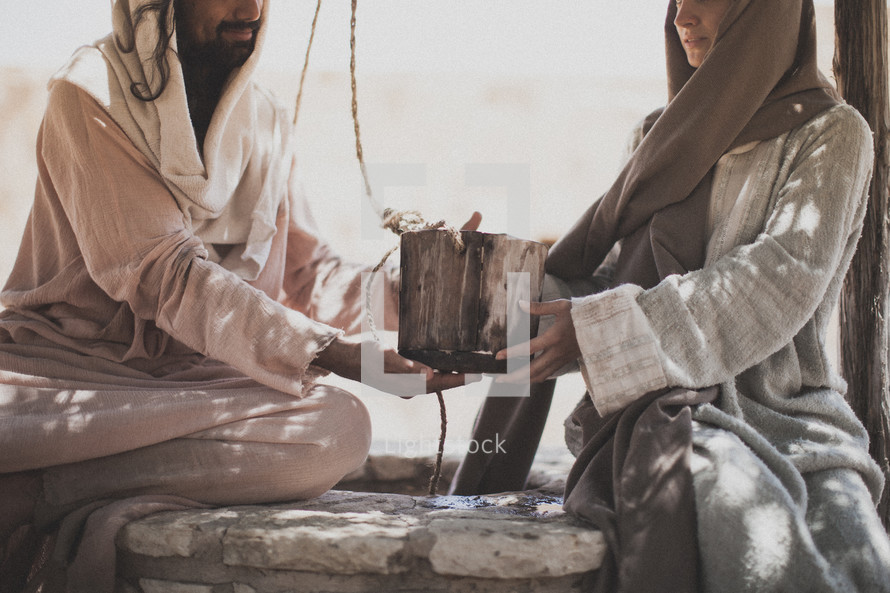
When Jesus had His encounter with the Samaritan woman at that midday well, she revealed something about herself that I think is still common today, in and outside of the Church: an attraction to forms.  For her and other Samaritans, it was where GOD was worshipped that counted.  This kind of preference wasn’t peculiar to Samaritans; the observant Jewish population had its own set of preferences including where worship was supposed to take place.  I hear similar attitudes expressed today when people occasionally compare one church against another.

Years ago, I heard someone say that if you package something in the right way, people will want it and buy it just about regardless of the intrinsic worth of what has been packaged.  Consumer goods makers have long packaged and branded their products with a certain kind of appeal.  At the moment of this writing, I’m thinking of two highly priced, luxury cars, both of which have a less than stellar record of mechanical reliability.  Nonetheless, that issue doesn’t appear to me to have hampered their sales; I see a lot of them on the road.

Image result for consumer marketing

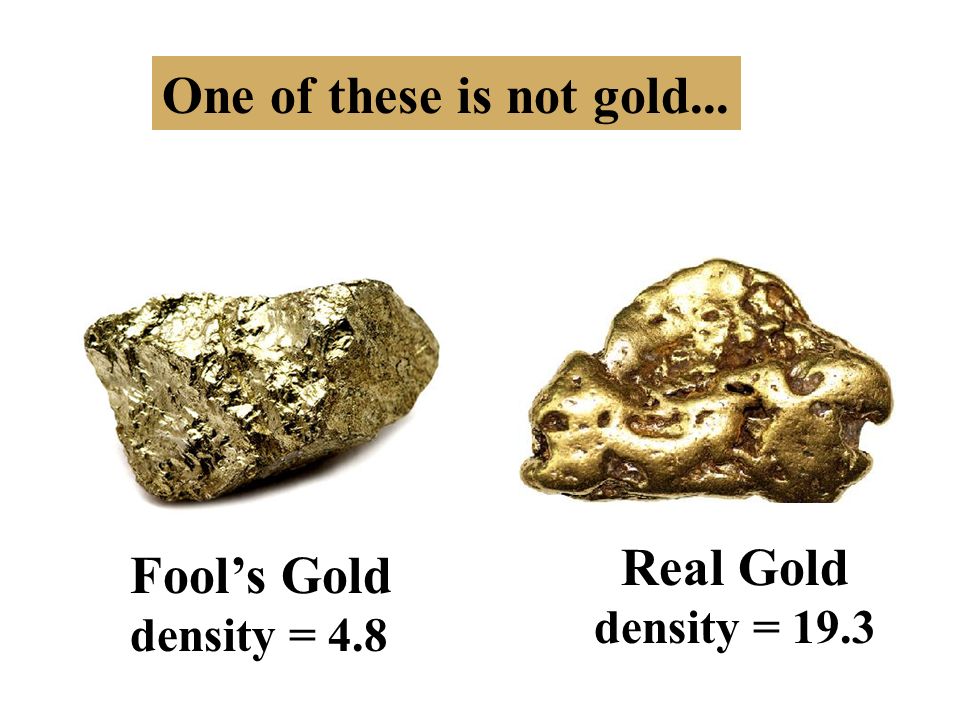
It’s now not uncommon to hear people talk about their brands, i.e. how they want others to perceive them and their supposed value-added presence, participation, engagement, etc.  Significant money is spent by churches marketing their brands.  Potentially interested people check them out, in person or through whatever online presence they have to see if the substance and the forms of what a church is offering is appealing to them.  As in other avenues of choice, folks make decisions based on both substance and form…and sometimes, I think, more on form than substance.  I, and I’m sure you, have peeled back the layer on more than a few eye and ear appealing things to discover all that glitters is not gold.

Image result for gold vs fools gold

Jesus used the opportunity of this encounter to point the Samaritan woman to what was truly spiritual gold.  True worshipers, the kind that GOD seeks, worship Him in Spirit and truth.  It has nothing to do with what the building looks like, or the appearance of the church’s website, or whether it is big or small, or the kind of music that is played and sung, or whether it is high church or low church, or if those who attend wear suits and dresses or jeans and flip flops.  GOD’s people can worship Him in a cathedral and under a tree in a field, in a garage and in a retreat center, in the presence of thousands of people and in the quiet solitude of a personal prayer space.

What counts is not whether our worship provides us with emotional release in the presence of others, but if the worship flowing out of us is led by the Holy Spirit (“For those led by the Spirit of GOD are the children of GOD”–Romans 8:14).  Worship in the Spirit is led by the Spirit.  And, then, our earnest effort to follow the teachings of Jesus is worshiping GOD in truth for Jesus is the visible, tangible manifestation of GOD’s truth (“If you hold to My teaching, you are really My disciples.  Then you will know the truth, and the truth will set you free”—John 8:31-32).

Image result for presentation of food on plates

We may have preferences for what our food looks like on the plate, but it doesn’t alter the substance and taste of the food that gives our bodies the nutrients they needs to be healthy.  Presentation is a form.  The food (the Spirit and the Truth) is the substance. May we never substitute good-looking pap for what is truly nutritious.

© Byron L. Hannon. 2020.  All rights reserved to text content unless otherwise noted.

Much Respect

“…And that every tongue should confess that Jesus Christ is Lord, to the glory of God the Father.” (Philippians 2:11)

For some time now, I’ve been working at learning a second language, something I wish I had done long ago. I’ve heard or read from different sources that the earlier one works at learning a new language, the easier it is for the tongue to give shape to the words of that language.  Conversely with increasing age, the tongue becomes less flexible in its pronunciation ability.  There are some words in my new language that I can look at on a page and pronounce in my head, but when I try to speak, the word comes out somewhat garbled.  I’m slowly getting better at it, but its work.

Image result for learning a new language

I recently had lunch with a colleague at a Peruvian/Brazilian restaurant in Philadelphia.  The menu was in Spanish and Portuguese with English print in small letters under each item.  When the waitress came for our order, I asked for ensalada de camarones (shrimp salad).  Then the waitress asked me what I wanted to drink in Spanish, but she said it so fast (as least to my ear) that I needed my friend to translate for me.  He told me a few minutes later that the waitress thought I was Latino.  My pronunciation when I ordered must have been pretty good.  So…I’m getting a little better, but I have a long ways to go.

I’ve always been confounded by those who get irritated at those new to our country who don’t speak English or who don’t speak it well.  Too often, they are treated as being defective people.  That’s an attitude that is flat-out anti-Christian.  Learning a new language can be difficult, and I have much respect for everyone who tries.  I have regular contact with those born outside of this country, and most of them know at least two languages, including English, and some know even more.  Even those who are still struggling to learn English know it better than I know Spanish.  Encouragement and support rather than castigation is in order, particularly from those who are of the household of faith.

Image result for offering help

Perhaps a fresh way of looking at Paul’s prophecy in Philippians 2 is that Jesus Christ is Lord will be confessed in every tongue as well as by every tongue.  I think there’s room for both views.

© Byron L. Hannon, 2020.  All rights reserved to original text content.

The Gift of Infinite Options

When [the Magi] had gone, an angel of the Lord appeared to Joseph in a dream. “Get up,” he said, “take the child and His mother and escape to Egypt.  Stay there until I tell you, for Herod is going to search for the child to kill Him.” So he got up, took the child and His mother during the night and left for Egypt, where he stayed until the death of Herod.  And so was fulfilled what the Lord had said through the prophet: “Out of Egypt I called My Son.” (Matthew 2:13-15)

 Image result for matthew 2 13 15

I’ve long believed that the central theme in Scripture, from the story of fall in Genesis through the Revelation of Jesus Christ, is the total redemption of GOD’s creation.  In Genesis, we see it in the prophetic word announcing the ultimate victory of “the seed of the woman.”   We see it hinted at in GOD’s covenant with Noah.  We see it at the divinely caused confusion at the Tower of Babel that prevented humanity from early self-destruction.  We see it in GOD’s covenant with Abraham that led to the formation of, provision for, and protection of Israel through whom would come the Savior.  We see it in the promises made to David that his own heir would sit on his throne forever.  We see it in every exhortation and warning of the prophets to trust GOD and to repent from sin and evil.

We see it in the incarnation of the Word, Christ Jesus, GOD’s peace offering to broken humanity, and in whose life is light and in whose way is healing and everlasting life.  We see it at Pentecost when the Holy Spirit fell upon all flesh, and who gave power to those ready and wanting to receive. And we see it in the continuing victory of the Church despite its own shortcomings and all efforts to discount it, disable it, and crush it. Worldwide, the reign of Jesus is growing, not shrinking; and His disciples await the zenith and culmination of Earth’s history with His return.

Image result for Christ's return

The truth is that GOD has not allowed anyone or anything to stop His plan to redeem the work of His hand.  Herod tried in a most savage way, but he was thwarted–“take the child and His mother and escape to Egypt.  Stay there until I tell you, for Herod is going to search for the child to kill Him.”  The Caesars and many subsequent power structures have tried to destroy the vision and promise wrought by “this child,” continuing even today.

“WITH [GOD] GOOD BASICS, YOU’LL HAVE ENDLESS OPTIONS”

GOD however, does not run out of options when it comes to ensuring the work of redemption.  And He does it in the most creative of ways.  For instance, He gave Elisha’s servant a vision of the mighty army of heaven ready to fight against the enemy threatening the destruction of His chosen people.  Later, He introduced an immigrant Moabite woman (Ruth) to a Judean named Boaz and they became the great-grandparents of King David.  He used the aged and reformed profligate, Solomon, to teach us about godly wisdom.  He used Paul’s imprisonment as a way for Paul to witness to the Roman political hierarchy about Jesus.  The examples go on and on.  Attempts to marginalize GOD and His plan have been and are been made.  Those of the past were proven to be ineffective works of straw.  Those of the present and future will be proven to be unwise, irrelevant and ineffective.  GOD always has an option.

The Apostle Paul refers to the status of the faithful as being in Christ, meaning simply our lives have become one with Christ’s, by faith and the will of GOD.  As such, each one of us is an agent and a servant in GOD’s redemptive story; and GOD plans to use us, and does.  In our weakness, it’s easy to lose sight of this truth.  In our weakness, we sometimes feel overwhelmed by life’s challenges, by felt needs not realized, by the weight of our responsibilities, and by our inability to see better options.  But GOD has an option we generally don’t see…until He chooses to reveal it.

Image result for those who wait on the Lord

Perhaps a prayer we can pray is to be more trusting of Him with our lives, particularly when we feel like we’re on life’s roller coaster.  I’m sure Mary and Joseph felt that way a lot.  Remember, each believer plays a part in GOD’s grand plan of redemption. Let’s focus on discovering and playing our parts.  How He takes care of us and what He does through us is all up to Him and His creative will.  The story of redemption is one story, and you and I have a part if we are in this same faith.  Recall what Jesus said, “If you remain in Me and I in you, you will bear much fruit…” (John 15:5). 

 In the midst of living our lives, caring for children, going to work, doing work around the house, paying the bills, and doing our best to live faithfully, we may be able to see what that fruit looks like and to watch it grow on the vine…or we may not.  Either way, our job is to be in Christ, to remain Him, and to “trust in the Lord with all of our hearts, leaning not on our own understanding, acknowledging Him in all our ways, and He will direct our paths (Proverbs 3:5-6), just like He did for Joseph that night.

Nothing, nothing will successfully get in the way of what GOD is doing.  He’s got infinite options, including more than enough for you.

May You Enter the New Year with Great Hope and Much Joy  

May GOD Bless You Richly 

© Byron L. Hannon, 2019.  All rights reserved to original text content.

Faith That Ponders

When the angels had left them and gone into heaven, the shepherds said to one another, “Let’s go to Bethlehem and see this thing that has happened, which the Lord has told us about.” So they hurried off and found Mary and Joseph, and the baby, who was lying in the manger. When they had seen Him, they spread the word concerning what had been told them about this child, and all who heard it were amazed at what the shepherds said to themBut Mary treasured up all these things and pondered them in her heart. (Luke 2:15-19)

I get it why believing faith is so difficult for a lot of folks.  We’ve managed to rationalize away all mystery.  Mystery is uncomfortable, and we don’t like discomfort as a rule, and certainly the discomfort of not fully understanding something, along with several other things, like waiting.  It’s all so frustrating.  And divine mystery operates on an entirely different level, one that many people find offensive.  We want to believe, like William Ernest Henley, that we are the “master of our fate, the captains of our soul.”*

On top of that are the things we see and hear each and every day, and may even be directly affected by…things that engulf our lives in darkness.  Nearly everyone who reads this has experienced or is experiencing something that cuts deep inside: hurts, disappointments, failures, anger, resentment, sadness, loss, grief.  And there are also those who probably won’t see this for whom waking each day presents a new challenge, sometimes about basic safety and survival.  “What is there to eat?”  “My electric is about to be cut-off and I don’t have the money to pay the bill.”  My child is too sick to go to school, but I can’t afford to miss a day of work to stay home with her.” “We have no money to buy Christmas gifts for the children.”  Have you ever known anyone who lost their job a few days before Christmas?

It’s easy to understand why people find it hard to believe in GOD, and certainly to believe in a loving GOD.  That just doesn’t make much sense, not with all this life distortion that surrounds us.  It’s not logical.  There are too many points of evidence that say otherwise. Logic says the best thing any of us can do is to put aside that foolishness; it’s every man, woman and child for themselves.  We need to take control of our lives and make out of them the very best we can.  And that, in a nutshell, is the philosophy of much of our age.  All we need to do is to look around at those we know to see that it’s true, even if many of those same folks wouldn’t admit it.

By all accounts available to us, Mary was a peasant girl who lived among peasant people who lived in a part of Israel that was considered socially low class.  Think of the towns or parts of cities you probably wouldn’t want to live in…that’s where she was from, both she and Joseph.

There wasn’t much in her experience to suggest that she was days away from winning the grand prize of Publisher’s Clearing House.  She probably expected to live out her days as the women in her family before her had lived out theirs, humble, long days of work in and around the home, eventual marriage, bearing multiple children, likely becoming a widow at some point, depending on her sons to provide for her, and eventually dying before age 50.  She had that to look forward to and the prophetic history of her people.

There was nothing else in her experience that suggested life would be any other way…until the events that began with the visitation from the angel Gabriel and which culminated in that animal stall in Bethlehem.  What particularly got to her was what the shepherds and the visiting magi, and perhaps what others who dropped in on them had to say about her son.  They were forecasting phenomenal things…better than Publisher’s Clearing House.  The Word said she pondered these things in her heart.  The only thing she had to validate what was being said was that mysterious visit from the angel (which could have been just a weird dream) and the prophetic history that her people held on to, because everything else said, “This is too crazy to believe.  It’s too crazy for me to put my hope in.”

We ponder things all the time.  We think about and wonder why life is often the way it is.  We have mental wrestling matches about the things we don’t like and can’t control, and don’t understand.  And sometimes our pondering leads to questioning the love of GOD, the truth of GOD, and even the existence of GOD.  Is it not so?

Mary’s foundation, despite its humble appearance, was deep and solid and strong.  All the while she was trying to sort things out, humongous, other-worldly things (literally), her faith in GOD never left her.  It can be said that it was her faith that pondered.

Oh that it might be said of each of us, that our foundations in the Lord are deep and solid and strong.  May our pondering of the mysteries of GOD always be in faith…because one day, the Mystery born that night will be revealed to us in all of His fullness, all of His glory, and all of His majesty.  Our eyes will see and our ears will hear.  Come, Lord Jesus, Come!

Wishing You and Yours a

Blessed and Faith-Filled Christmas


 * From the poem, Invictus, by William Ernest Henley.

© Byron L. Hannon, 2019.  All rights reserved to text content unless otherwise noted.